For years, Chicago O'Hare has been the default gateway for air cargo into the Midwest.
That default is now being challenged.
Across the logistics industry, a growing number of importers, freight forwarders, and distribution teams are rethinking that decision. Not because Chicago is losing relevance, but because the true cost of operating through it has become harder to ignore.
The shift is not about geography. It is about economics.
The Hidden Cost of Moving Through Chicago
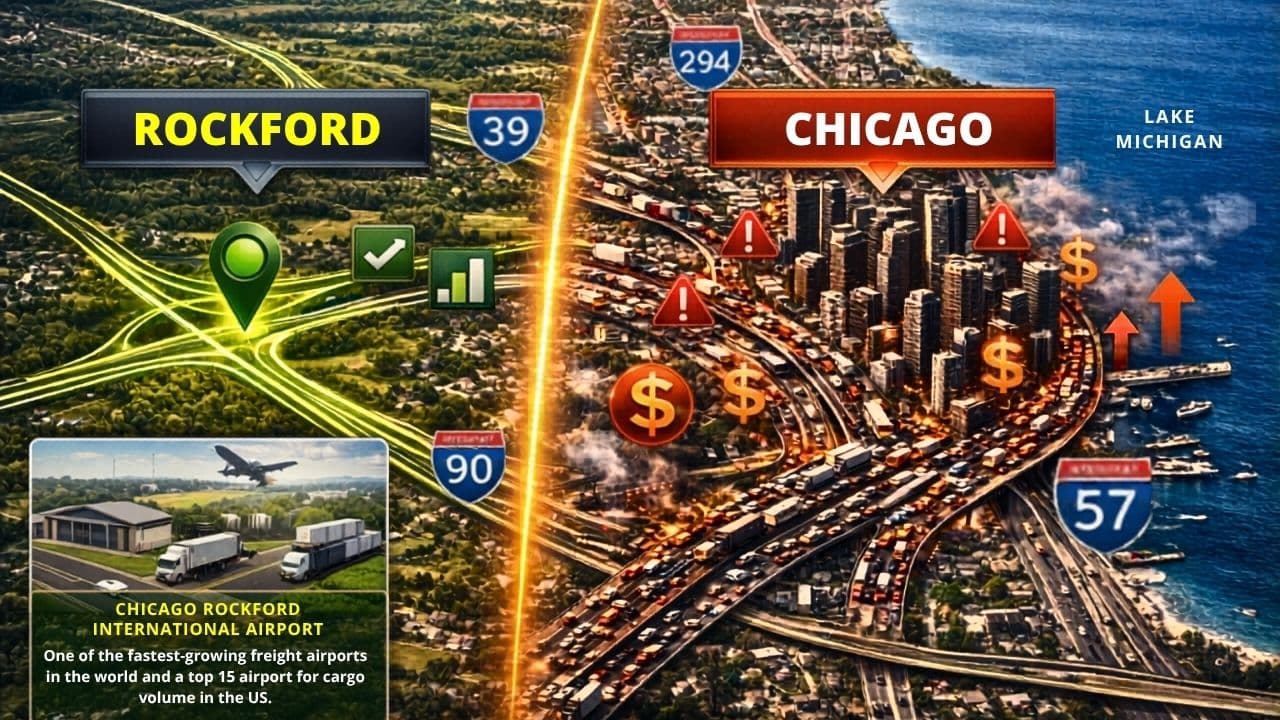
O'Hare was built for scale, but it operates in a highly congested and expensive environment. Costs stack across the process — higher landing fees, mandatory service charges, storage costs, congestion premiums, and unpredictable trucking delays.
Warehousing near O'Hare is among the most expensive in the Midwest. Even short haul trucking can become unpredictable with traffic delays, dock congestion, and detention time.
Individually, these costs may seem manageable. Combined, they erode margin.
Why Rockford Is Becoming the Smarter Alternative
Chicago Rockford International Airport was built with cargo in mind. It operates differently.
Lower airfield and handling costs reduce exposure from the start. Twenty-four-hour operations allow freight to move without curfews or congestion bottlenecks.
Within minutes of RFD, companies gain access to warehouse space that is often thirty to fifty percent lower in cost compared to O'Hare corridors. Facilities like Meiborg's — 7 area warehouses covering over 1.5M sq ft of space. The Greater-Rockford area's largest and fastest growing warehousing and 3PL provider.
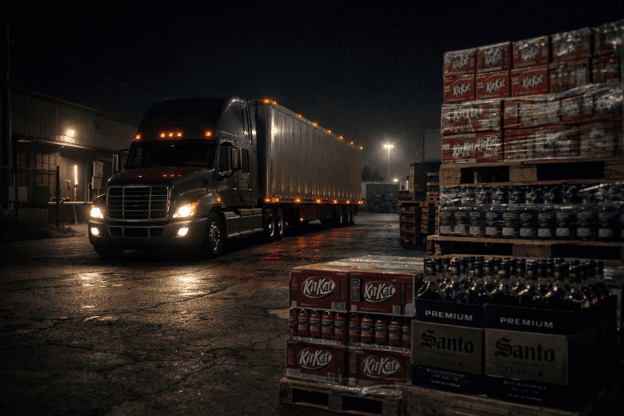
Transportation out of Rockford is also more predictable. And being an asset-backed 3PL like Meiborg has its advantages. With over 250 trucks and 800 trailers, we can haul your load to and from the airport to our warehouse as well as the final destination.
The Total Landed Cost Advantage
When airside handling, warehousing, and transportation are evaluated together, the difference becomes clear. Chicago offers volume and familiarity. Rockford offers efficiency and predictability.
In many cases, companies are seeing double-digit reductions in total landed cost without adding transit time. For decision makers, this is not a marginal improvement. It is a structural advantage.
Why This Shift Is Happening Now
Fuel costs are rising. Cargo theft is increasing. Supply chains are less predictable. Companies cannot afford inefficiency. They need locations that reduce cost, improve speed, and support long-term growth. Rockford is positioned to do exactly that.
How Meiborg Supports This Advantage
At Meiborg, our Rockford operations are built around this reality. We provide access to strategically located warehouse infrastructure near RFD, supported by strong highway connectivity through I-90 and I-39, as well as rail access through CN Rail.
Our facilities offer bonded and FTZ capabilities, scalable space, and the operational support needed to move freight efficiently from arrival to final delivery.
Because in today's market, it is not about where your freight lands. It is about how efficiently it moves after it gets there.
The Bottom Line
Using O'Hare because it has always been the default is no longer a strategy. It is a cost decision.
Companies taking a closer look at total landed cost are finding that Rockford offers a smarter path forward. Lower costs, faster movement, and greater control across the supply chain.
World Class. Delivered.